


Botswana
November 3 au 18, 2025
2nd part - Savuti and Chobe National Park

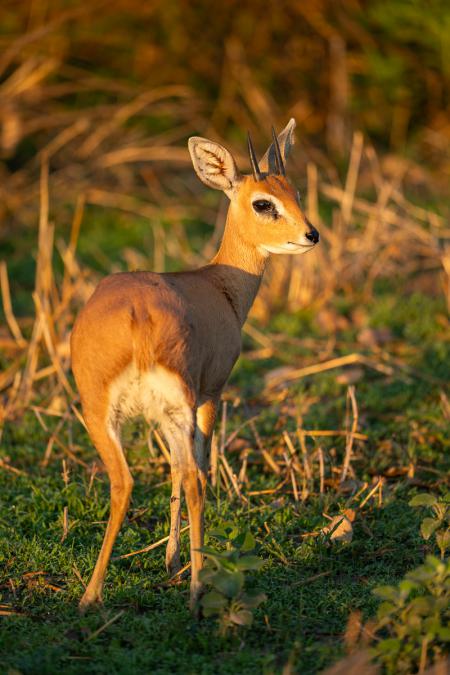
Thursday novembre 13 : departure at 5:35 a.m. First encounters of the morning: giraffe, steenbok in the beautiful light of sunrise.
We head north towards Pump Pan, a watering hole, but there are no animals. Further on, there are an impala
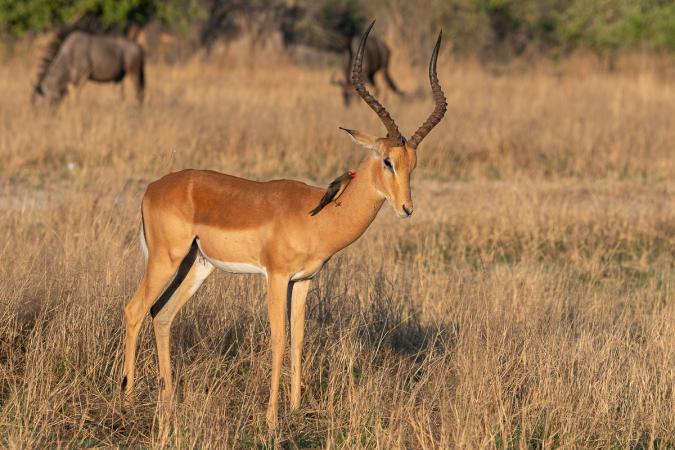
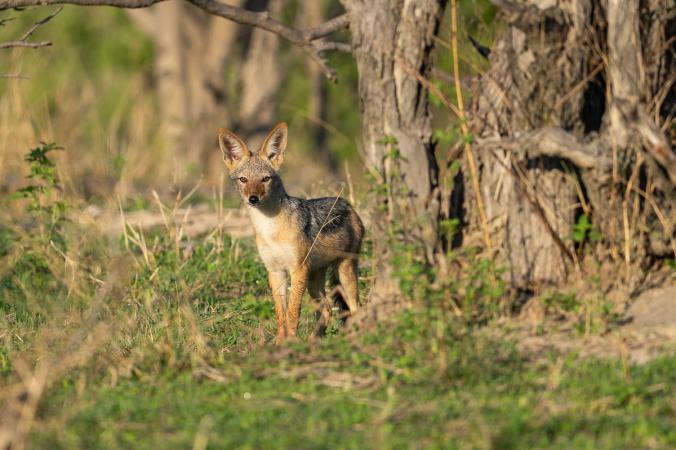
and a wildebeest greeting us. We hear little squeaks. We get closer. They are young jackals. There are two of them with their parents.
A little further away, in the golden savannah, we spot two cheetahs. It's a shame they're not closer. We make a big detour to follow the direction they took (we're not allowed to go off-road), but despite “radio exchanges,” we can't find them. For now, we settle for a kori bustard and, once again, a steenbok. We come across a giraffe. There are lion tracks in the bush. We come across a pride of about ten lions, the North Pride. They are quietly resting in the shade of some bushes. We have breakfast at around 8:45 a.m. at a meeting point in the park; it is forbidden to leave the cars outside these points. Elephants and buffalo pass by right next to us. We head back down south a little and pass Leopard Rock Hill,
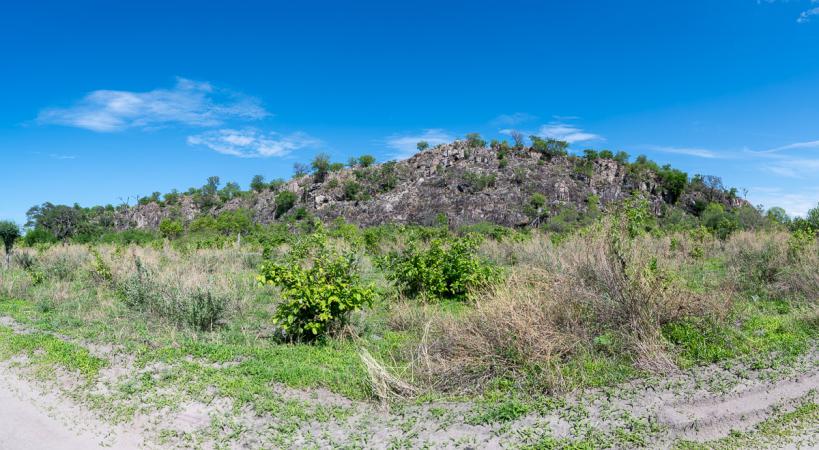
a mountain where leopards may be found when the females have their cubs. At the edge of a pond, a fish eagle lounges.
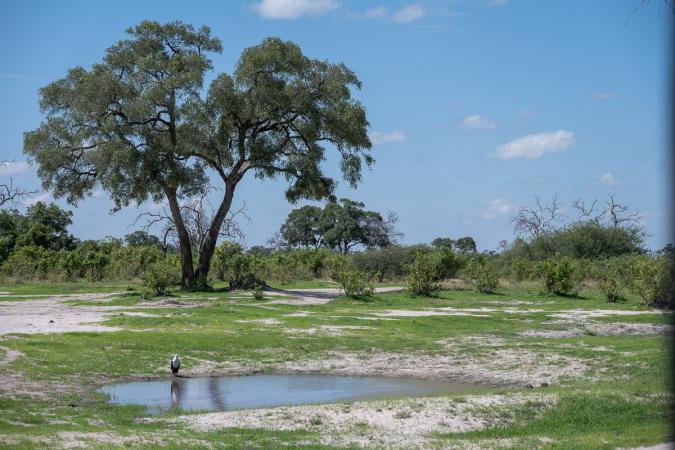
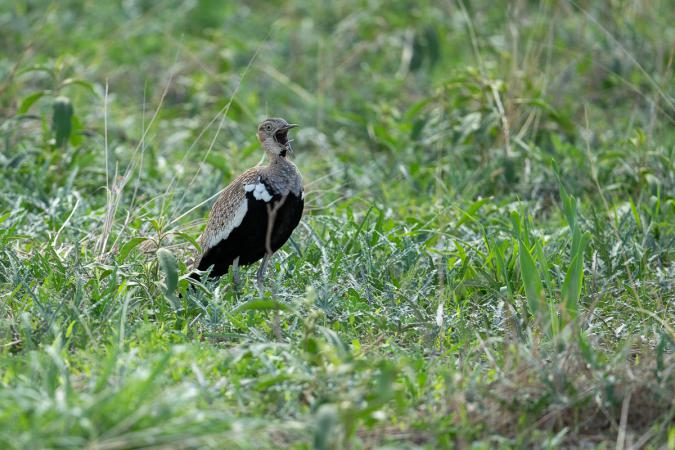
We go back to see the lions. They are still sleeping! We then spot some impalas in the tall grass and a wildebeest in the savannah. We go back to see if the cheetahs have come out of the bush, but... no! A kori bustard is very close to the vehicle. It is a female.
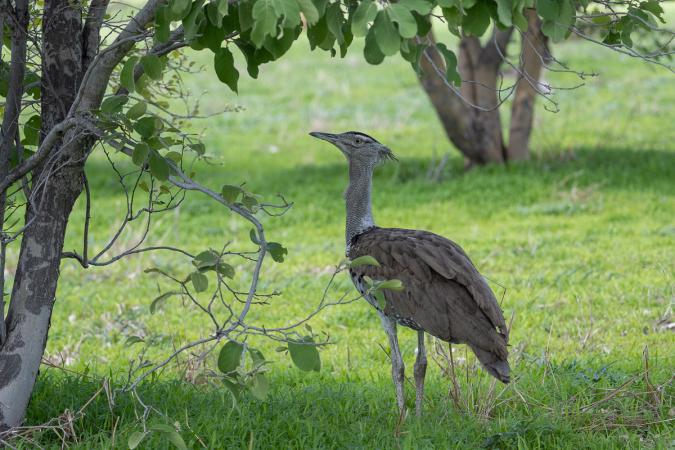
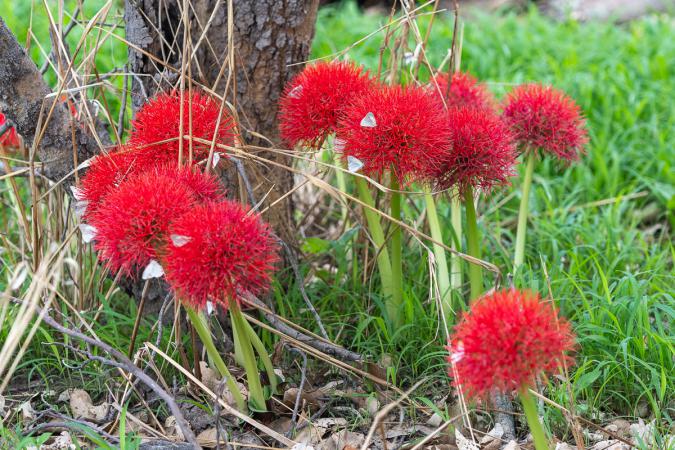
It is one of the heaviest birds capable of flight in the world. At the edge of a green meadow, Newman lets us get out of the car to photograph red pompom-shaped flowers. They are Red Ball Lilies. There are lots of butterflies.
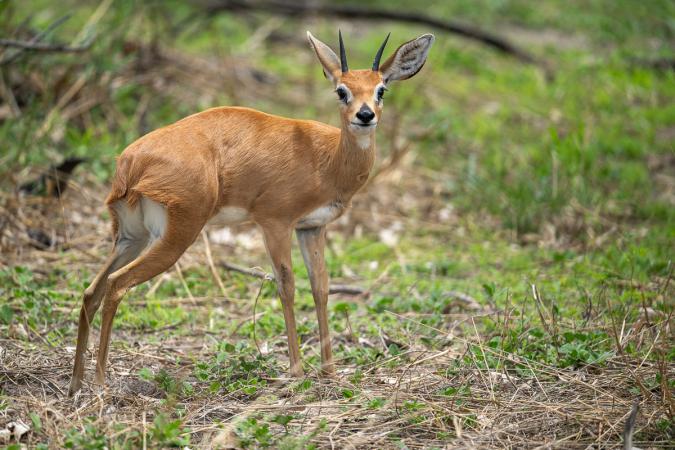
We drive on, and a steenbok watches us. It's really cute.
We return to camp at 11:35 a.m. On the menu for lunch today: sausage and bacon omelet, beans, tomatoes, and homemade bread. Rest and snack time. We get back in the car at 3:30 p.m. A crested bustard is behaving strangely. It is a male. He flies away and then suddenly drops down without flapping his wings. Newman explains that this is to attract females.
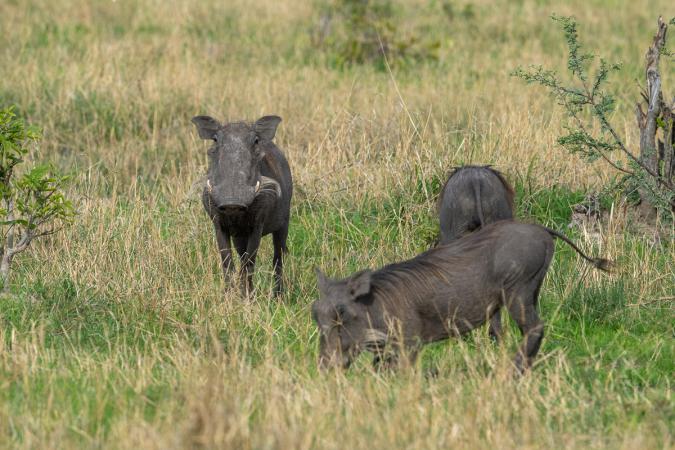
The lions we saw this morning are still in the same place under their bushes. We head south. Giraffes, warthogs,
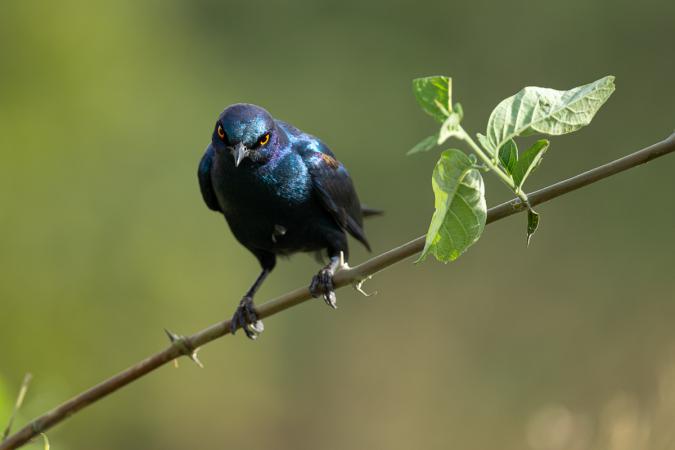
impalas, red-billed hornbills and red-shouldered starling allow themselves to be photographed.
We spot something in the distance. Unless our guide had inside information, we come across more lions. Two females, each with three cubs aged between six and eight months. They belong to the South Pride. They are eating a zebra that was apparently killed the day before.
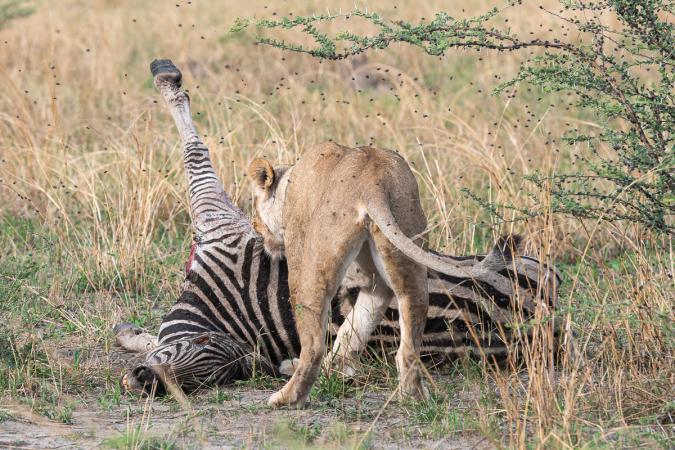
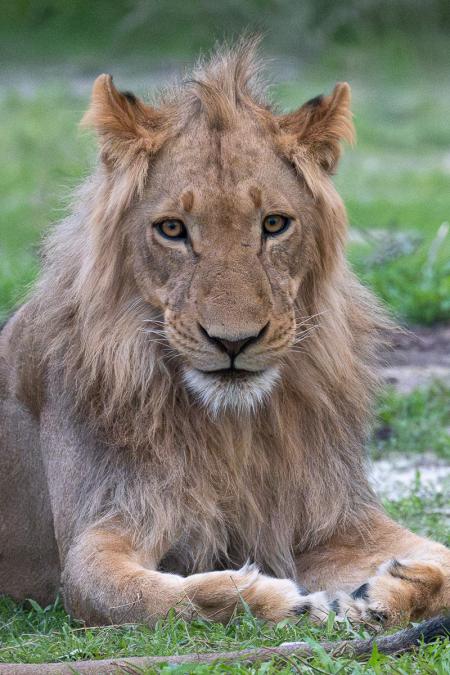
We stay for a while to watch them. On the way back, in the savannah, we spot three bat-eared foxes. They quickly run away. The radio is talking about cheetahs. We rush off to look for them in the tall grass, but again without success. We pass by the North Pride again. This time, they have come out from under the bushes. The three brothers, aged three or four, are clearly visible.
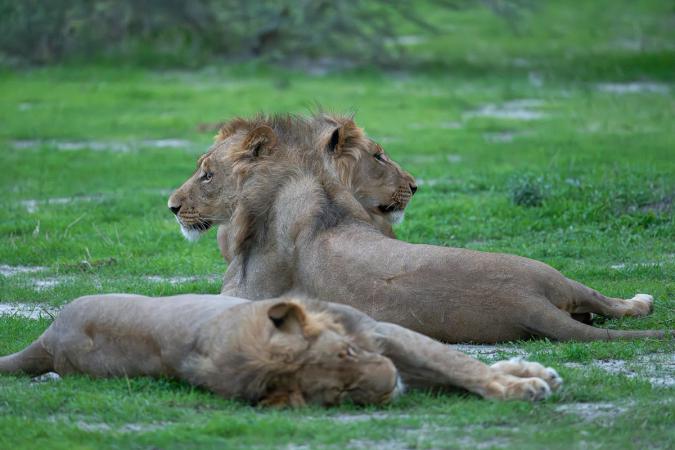
Their manes are not yet very thick.
We spot elephants but don't have time to stop; we have to be back at camp before sunset. That's park policy. We arrive at 7:00 p.m. Campfire aperitif followed by dinner: avocado and asparagus salad, osso buco with butternut squash polenta and vegetables with spinach sauce, coconut pie.
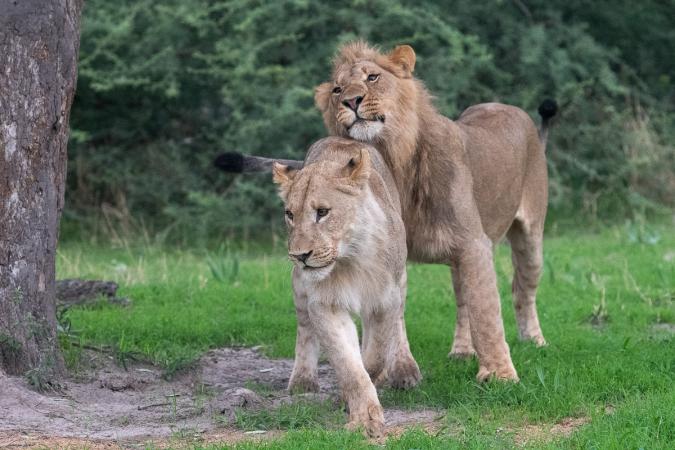
Friday november 14 : departure at 5:35 a.m. It's a “moving day", leaving Savuti for Chobe National Park, to the northeast. We start by saying hello to the North Pride, which is still in the same area. The lions are a little more active this morning! They're playing and cuddling.
We then go to greet South Pride. On the way, we come across a fish eagle. The zebra carcass has been moved under a bush and is truly finished off. The lion cubs chase away jackals that would like to get a bite to eat. In the savannah, under a threatening sky,
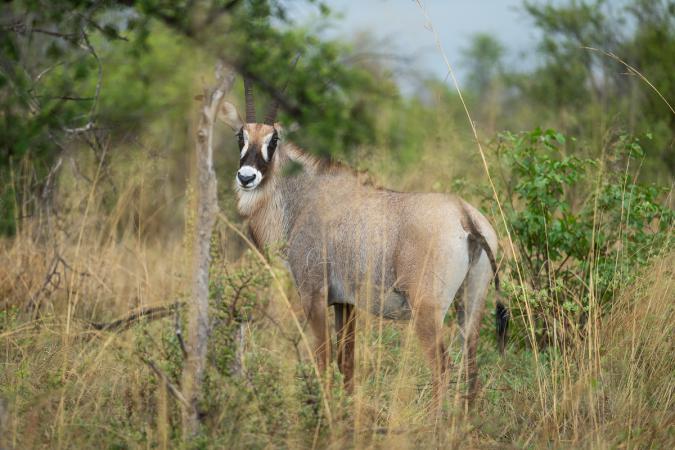
 Once again, we spot some otocyons. Around 8:00 a.m., it starts to rain heavily, so we close the windows of the car. Around 8:30 a.m., we stop anyway for a quick breakfast under a few drops of rain. Off we go again: crested bustards, roan antelopes (they look a bit like oryx with their black and white masks on their heads, but their horns are different).
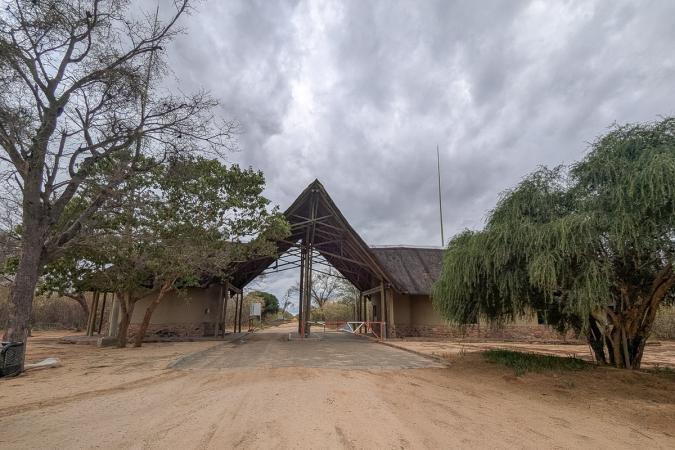
We take the road to Chobe. And at 10:20 a.m., we pass through Ghoha Gate.
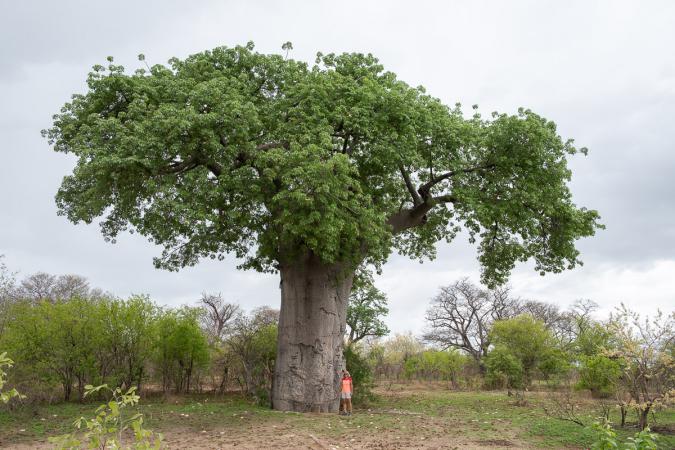
We drive through the Chobe Forest Reserve. The rain has stopped. We take a bathroom break near a huge baobab tree. I look tiny next to it!
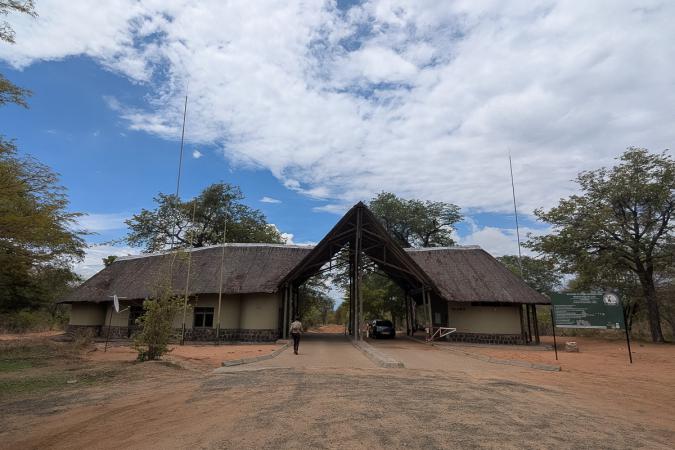
At around 1:15 p.m., we arrive at Ngoma Gate, where we enter Chobe National Park.
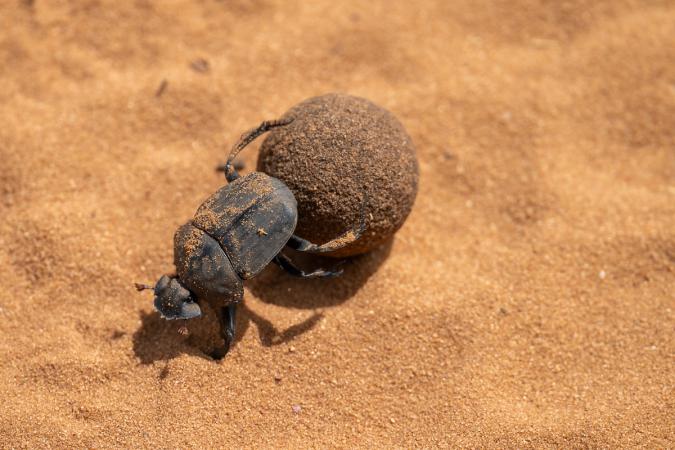
We have a picnic: tabbouleh with peas and tomatoes, slices of bacon, cheese, fruit salad. We leave around 1:50 p.m. In the bush, we see kudus. Here, the vegetation is different from Savuti; there are more tall trees, especially teak. The sand is redder. On the trail, there is a dung beetle rolling its big ball of... dung. It's perfectly round!
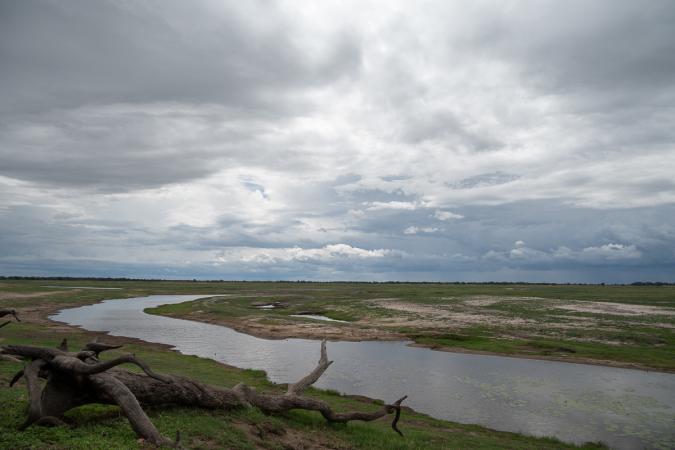
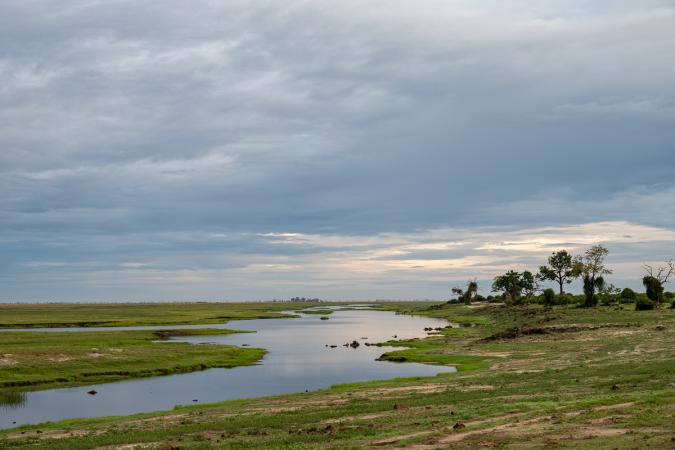
We drive along the Chobe River, which marks the border with Namibia, particularly the Caprivi Strip. There is not much water.
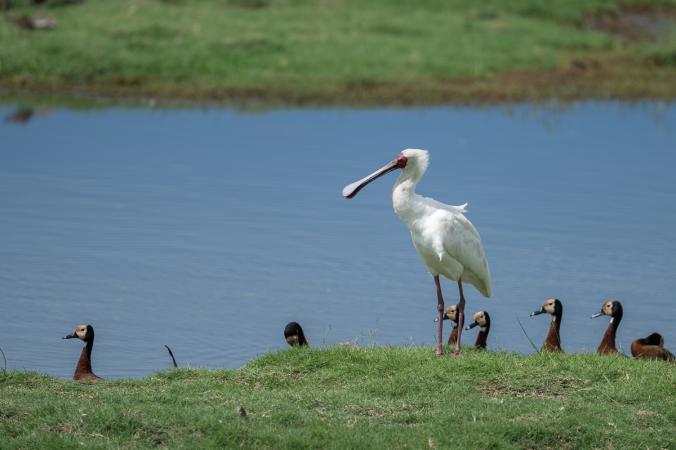
A jackal rests at the foot of a small shrub. Along the riverbank, there are many birds: white-headed ducks, spoonbills,
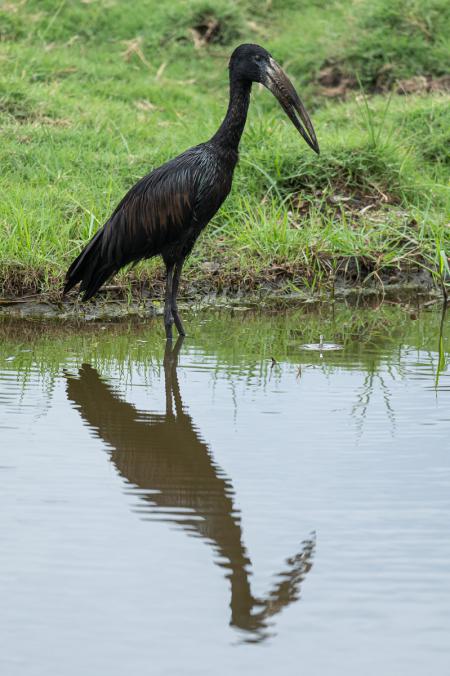
roller, an african openbill (it is black and has a kind of opening in its beak that allows it to break shells).
Cobes drink and graze on the riverbank.
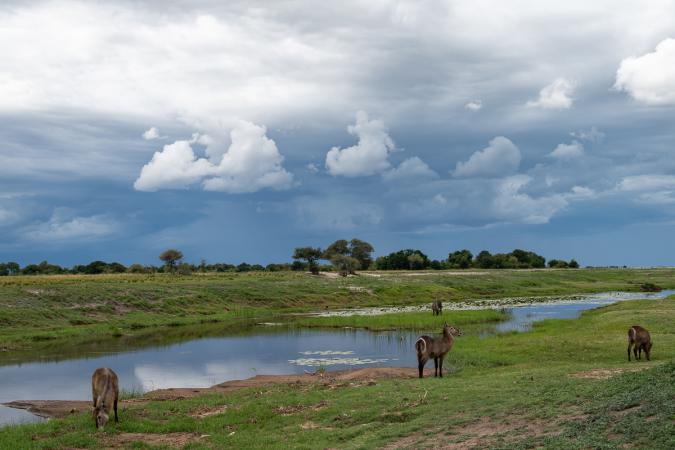
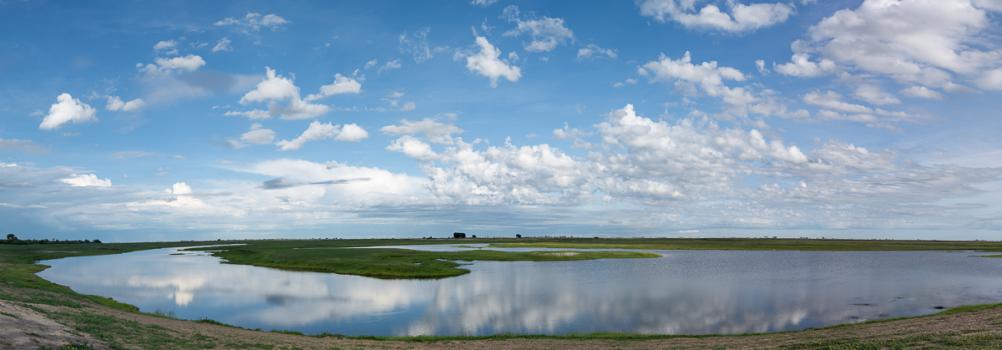
This part of Chobe is very pretty with the river and the contrast between the green grass and the blue water and sky. Further away, a fish eagle watches over who knows what from the top of its tree.
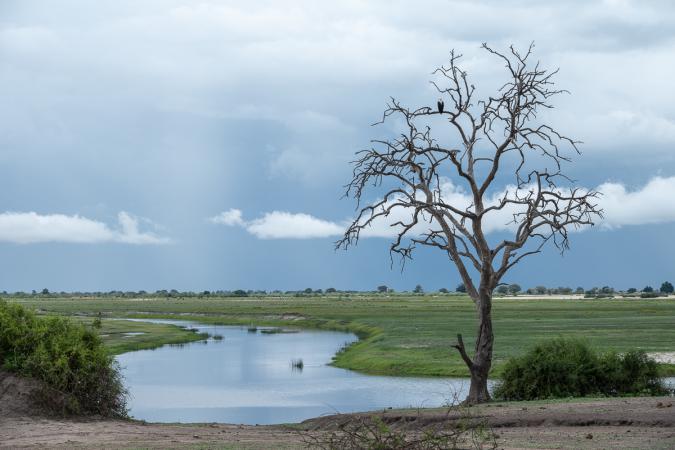
Crimson bee-eaters and dwarf bee-eaters flit about. A giraffe tries to hide behind a bush, but we've spotted it! Around 3:50 p.m., it starts raining again. A beautiful little herd of kudus watches us pass by. Females.
.jpg?v=1kp3o09)
There are males with beautiful twisted horns.
.jpg?v=1kp3o09)
Continuing on, we come across a large herd of buffalo.
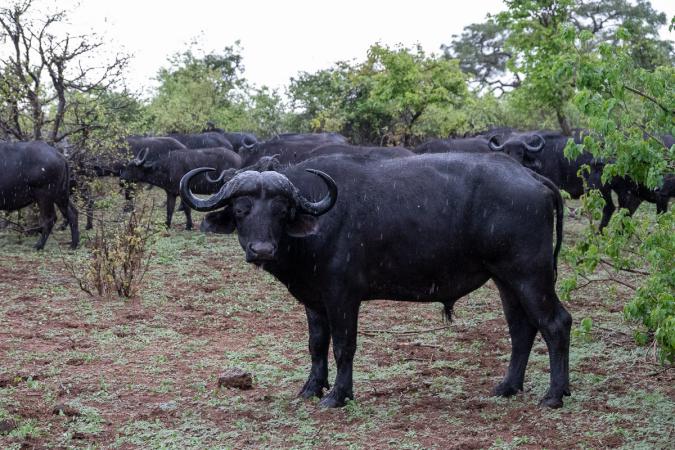
We arrive at the new camp at 4:45 p.m. in the pouring rain. It's pretty nice. We stay sheltered in our tents.
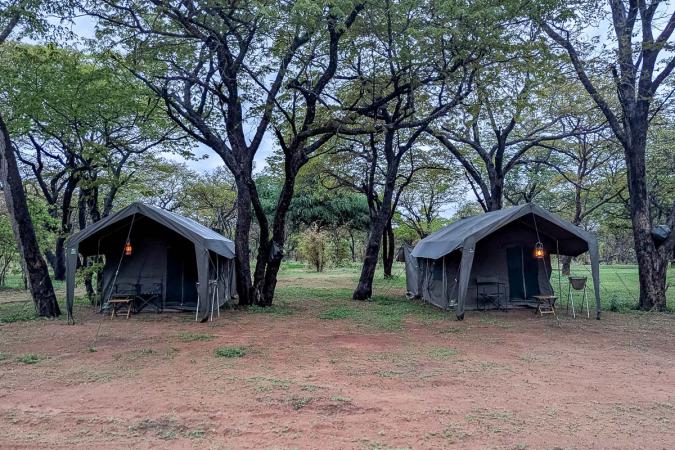
Around 6:00 p.m., the rain stops and we can enjoy an aperitif by the fire. Tonight's dinner: potato and corn soup, spaghetti Bolognese, vanilla cream.
* * *
Savuti review :
* * *
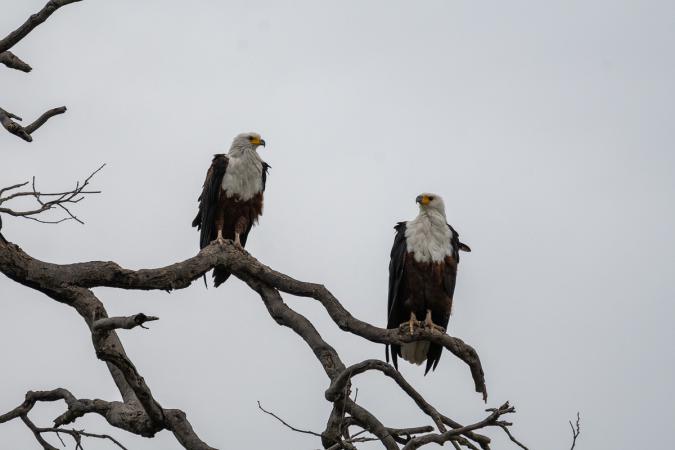
Saturday november 15 : departure at 5:35 am. Two fish eagles are chatting on a branch before one flies away.
We follow lion tracks on the trail but lose one that seems to be following buffalo. The other seems to have gone into the bush. We follow the river eastward. Baboons are perched in a tree. In the water or on the banks, we see spoonbills, great egrets, open-billed storks, hippopotamuses,
.jpg?v=1kp3oko)
fish eagle, carmine bee-eaters, crocodiles, blacksmith plovers, heron.
.jpg?v=1kp3oko)
On the other side of the track, near the trees and bushes, there are baboons.
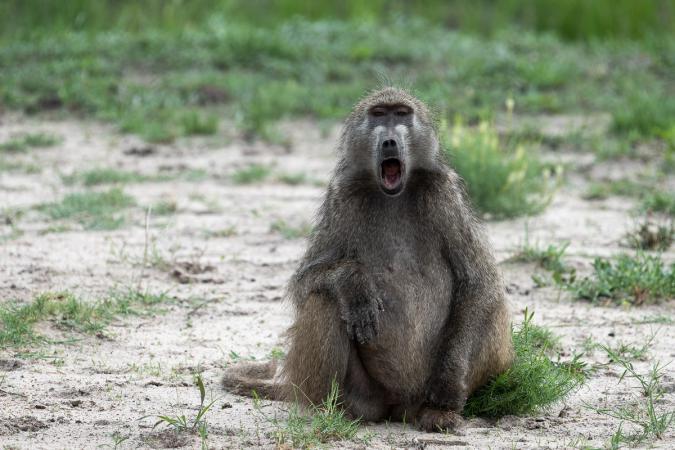
A little further on, we spot two young jackals.
.jpg?v=1kp3oko)
Then, not much else to see. We have breakfast at 8:30 a.m. on a picnic table. After seeing a hoopoe and a red-billed hornbill, we head into the bush. Nothing to see. Ah, there are a few giraffes and then a large herd of buffalo crossing the track. We drive and drive, but still nothing... We return to camp at 11:00 a.m. Lunch at 11:45 a.m.: chicken drumsticks, pineapple rice salad. Snack. We get back in the car at 3:45 p.m. Impalas, mongooses, and giraffes to start with. Then, once again, a large herd of buffalo crosses in front of us.
.jpg?v=1kp3oko)
It starts to rain. A dozen giraffes all look in the same direction.
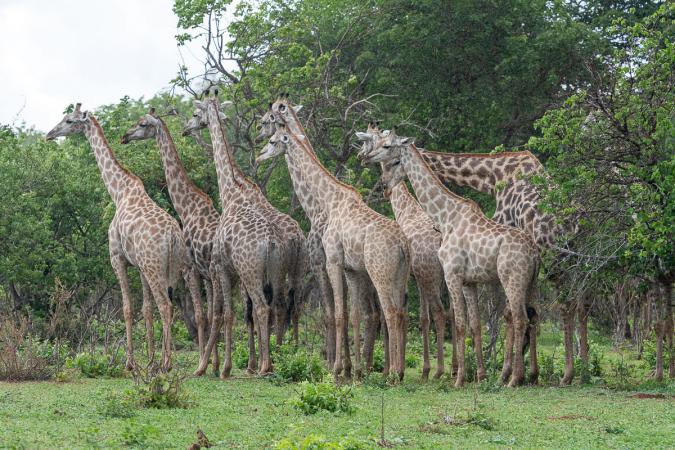
Kingfishers and egrets are abundant along the riverbank. Buffalo can be found on the opposite bank.
-panorama.jpg?v=1kp3or6)
Too bad we didn't see them cross. Ah, a slightly different bird, it's a stone curlew.
.jpg?v=1kp3or6)
We're still going round in circles without seeing anything and driving at 2 mph, it's painful. When I say 2, it's not even 2, sometimes the needle doesn't even go past zero! It's annoying. We get back to camp at 6:10 p.m. We have drinks in the tent because it's raining. On the menu for dinner: mushroom and grated carrot starter, sirloin steak with fries and salad, pineapple and cream dessert (Charlotte style). Very good, as always.
Sunday november 16 : departure at 5:30 a.m. for the river. In a tree and then on the ground, we see a different coucal: the white-browed coucal.
.jpg?v=1kp3p3c)
A jacana has caught a grasshopper, and a heron is watching for its meal in the water. The light is soft this morning.
A baboon is hiding in a tree with its baby. A new species of bird has been discovered: the Senegalese wattled lapwing. It has yellow legs and a yellow beak. And hanging from its beak is a yellow growth called a caruncle.
.jpg?v=1kp3p3c)
Fish eagles are always present along the rivers. It's a shame they don't fish in front of us! Jackal,
.jpg?v=1kp3p3c)
Impalas and crocodiles populate the surrounding area. Cars are parked on the main track. Lions are still sleeping under the bushes. We head off for breakfast at around 8:00 a.m. We follow the tracks on the bush side. Well, there's not much to see yet. Oh yes, a baby impala. So cute.
.jpg?v=1kp3p3c)
We see a greater blue-eared starling. The blue of its plumage shines brightly. In a muddy pool, a large lizard floats. It is a water monitor.
.jpg?v=1kp3pu9)
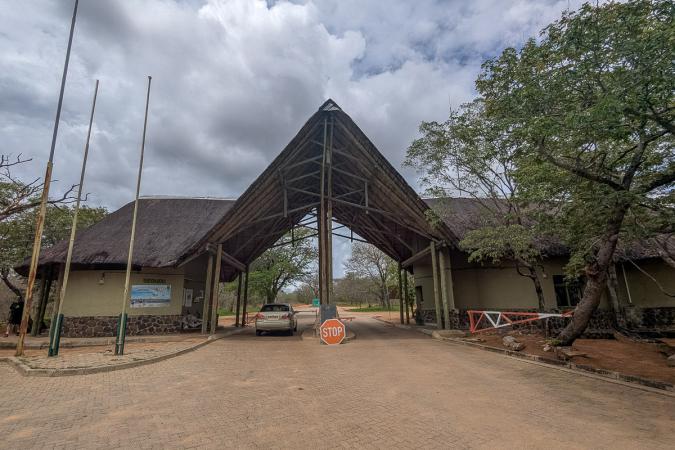
We head towards Kasane. In the bush, we come across a warthog and some kudus. Then, nothing at all! At 11:00 a.m., we pass through Sedudu Gate, the main entrance (or exit) to Chobe National Park from the east, from Kasane.
We go to The Old House B&B (3 stars) for lunch: pizza for the guys, sirloin steak and fries for me (the steak was a little tough). We leave at 1:35 p.m. We have an appointment at 2:00 p.m. for a boat trip on the Chobe River. It's going to be cool, well, we hope so! We park in a parking lot that doesn't look like much and board an 8-seater flatboat at 1:50 p.m.
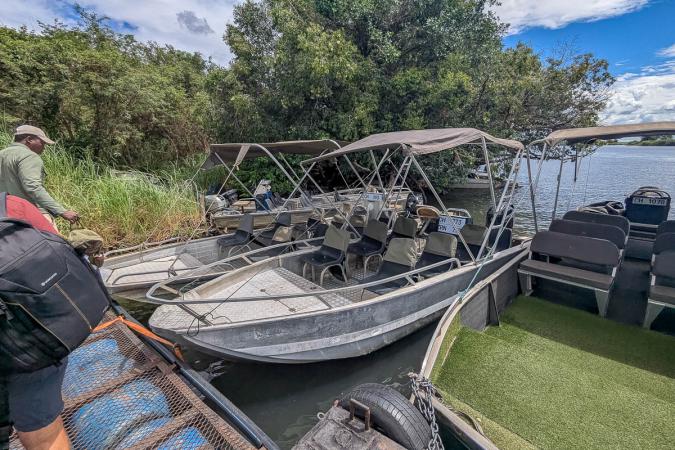
The guide, Ian, starts the engine, navigates a few meters, and stops at the park office by the river to check in. And then we're off for a three-hour boat ride. We travel down the river to the east. We are instructed not to put our hands in the water because there are crocodiles. It's very pleasant and warm. There are quite a few small boats and some larger ones. We see lots of things: reed cormorants,
.jpg?v=1kp3pu9)
yellow billed stork, hippopotamuses in the water and on the bank, crocodile on the bank,
-panorama.jpg?v=1kp3pu9)
buffalo on the riverbank, white-crowned lapwing (it also has a yellow wattle),
.jpg?v=1kp3pu9)
common sandpiperers, african darter, black crowned night herons, long-toed lapwings,
.jpg?v=1kp3pu9)
african jacana. After an hour and a half of sailing, our “wish” comes true: a herd of about twenty elephants walking along the river.
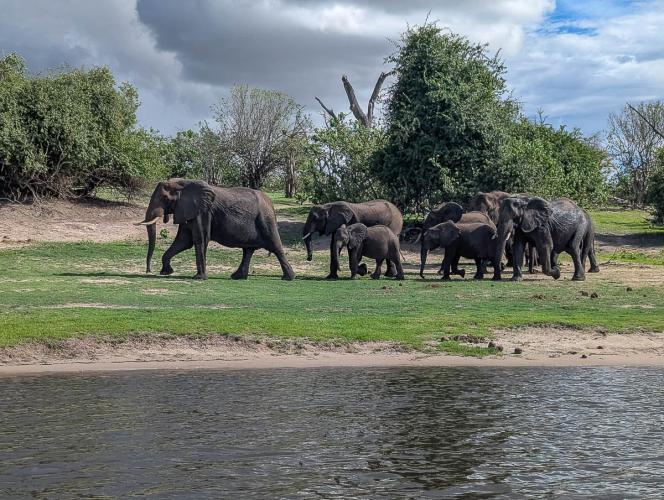
bathe and splash themselves with water.
.jpg?v=1kp3pu9)
There is a tiny one that is well protected in its mother's paws.
.jpg?v=1kp3pu9)
We stop to watch them and take pictures. Unfortunately, they don't stay long. We turn back shortly after and take another branch of the river. The parade of birds continues: a black heron (it is completely black),
.jpg?v=1kp3pu9)
african darter,
.jpg?v=1kp3pu9)
spoonbill, jacana, African cormorant, more hippos and crocodiles, the guide never gets too close. On the riverbank, we spot an african Openbill.
.jpg?v=1kp3pu9)
We see stone curlews again, but this time they are water thick knee.
.jpg?v=1kp3ql3)
then african skimmer. Their long orange beak is offset between the upper and lower parts.
 At around 4:30 p.m., it starts to rain lightly, then more heavily. The guide steps on the gas and we race back at full speed. We pull up to the pontoon at around 4:50 p.m. We find Newman with a clean car and a fresh haircut. On the way back to camp, we encounter kudus and a giraffe facing the setting sun.
.jpg?v=1kp3ql3)
We arrive at the camp at 6:30 p.m., just in time for drinks by the fireplace. It will be our last, sniff! For dinner: breaded cheese on salad as a starter, chicken cutlet with spinach sauce and potato gratin, malba pudding (African dessert). We then pack our bags in preparation for tomorrow's departure. Bedtime at 9:10 p.m., well done!
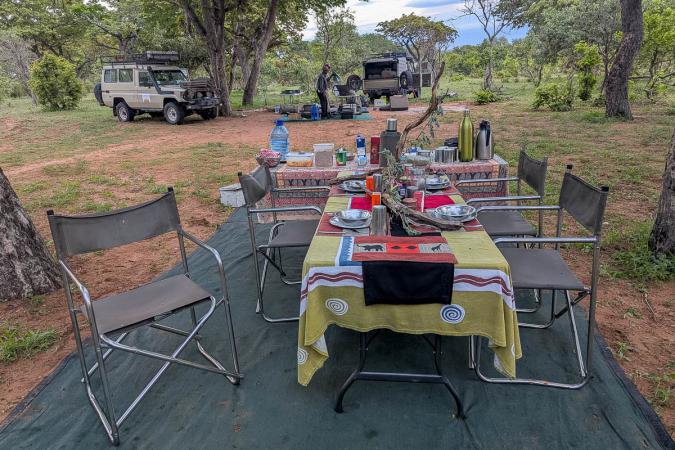
Monday november 17 : it's the end! Up at 5:00 a.m. Shower as soon as it gets light at 5:30 a.m. Real breakfast at camp while the team takes down the tents. By the way, we don't have a roof this morning!
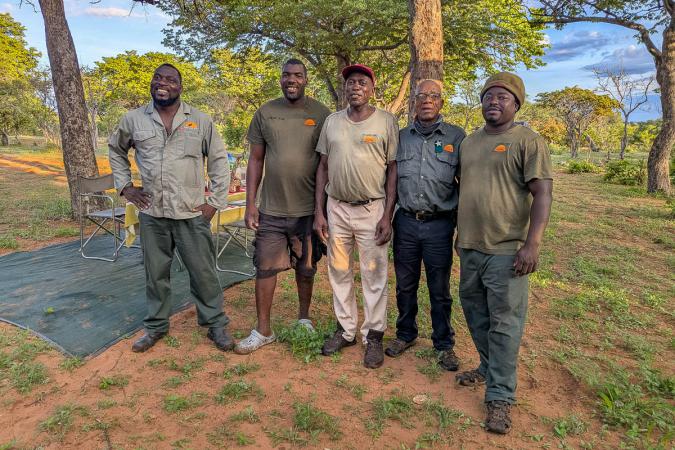
We say goodbye to the guys and take a souvenir photo. A big thank you to them.
Departure at 6:20 a.m. We return along the Chobe River. It's beautiful.
We see a tree covered in red: it is full of carmine bee-eaters.
.jpg?v=1kp3ql3)
A monitor
.jpg?v=1kp3ql3)
and impalas lounge around, while hippos bathe. An osprey perches at the top of a tree.
.jpg?v=1kp3ql3)
An African darter is drying itself on a rock. A water thick knee, a greater blue-eared starling... they have all come to say goodbye to us. At around 9:00 a.m., we take a bathroom break in the bush and drink some fruit juice. We take the main road and leave the park at 9:40 a.m. on the road A33. We pass through Sedudu Gate at 10:40 a.m. We arrive at Kasane Airport at 11:00 a.m. We thank Newman (kea lebora ra = thank you). The airport is very small. We take a look around the only small souvenir shop while waiting for check-in to open. After dropping off our luggage, we grab some fries and Coke at the only food shop, fries that we waited 45 minutes for! And there weren't even many people there! We were supposed to board at 1:30 p.m., but the Air Link plane didn't arrive until 1:50 p.m. We boarded at 2:15 p.m. for a 2:30 p.m. takeoff. We arrived in Johannesburg at 4:15 p.m.: passport stamping, security check. Boarding was at 6:25 p.m. and we took off at 7:30 p.m. The pilot told us that we would arrive in Paris at 6:30 a.m. the next morning instead of 6:00 a.m. because we had to fly around Niger and Mali, which are in conflict.
* * *
Chobe review :
* * *
Tuesday november 18 : breakfast is served at 5:00 a.m. french time. We land in Paris at 6:30 a.m. Given the time difference, we disembark on the tarmac and buses take us to the airport. We collect our luggage and then grab a taxi. We go to Étienne's house for a quick breakfast and to pick up our car, which is parked at his place. We arrive in our countryside at the end of the morning.
Copyright Magali and David BELLEC